An urban foraged fragrance
The origin of an idea
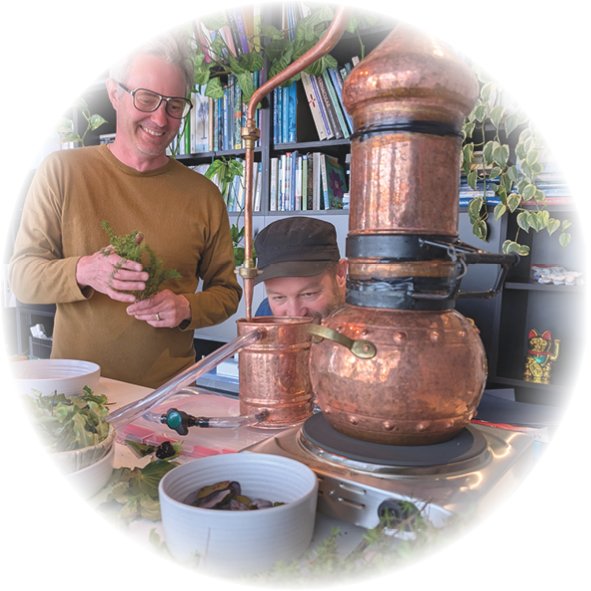
After a few years of co-creating foraged gin with our local community, Botanic has branched out (excuse the pun!) to explore how native plants can charm a different sense - smell. On a recent trip to Japan, Adrian took part in a ‘create your own fragrance’ experience in Kyoto, and we were also inspired by the Ngāi tahu fragrance made from the taonga species taramea Aciphylla aurea. The seed was planted!
Learning a new craft
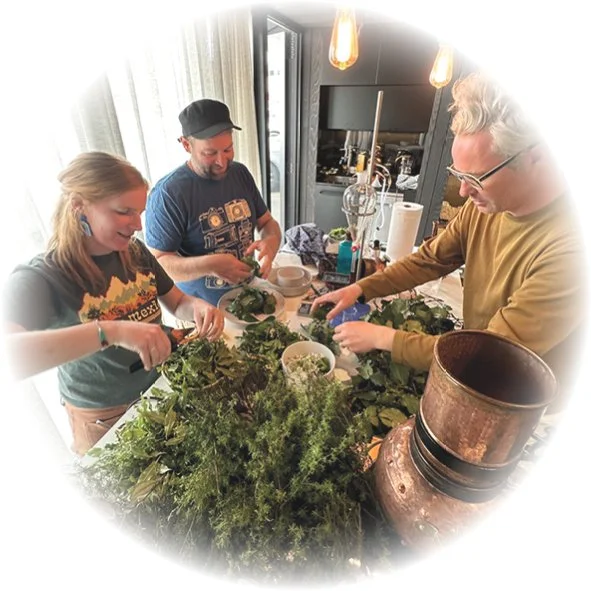
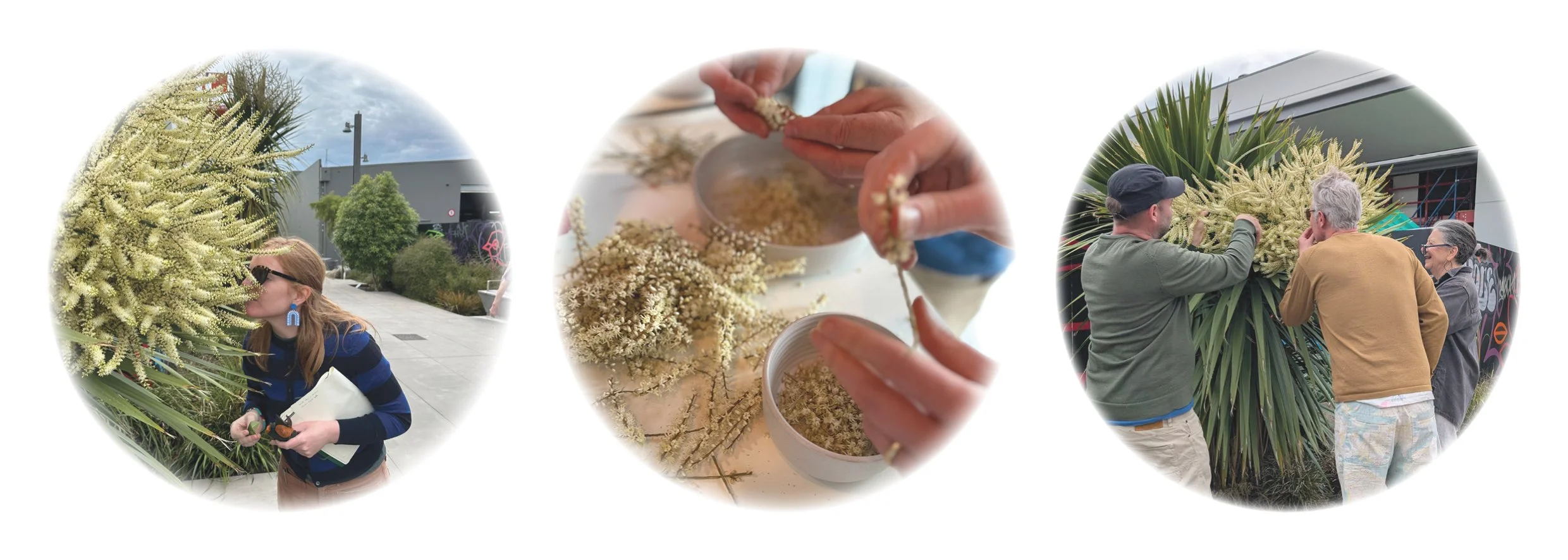
So how could we craft a fragrance made from native plants from our local urban landscape? Cue Jill Mulvaney from Alembics. We undertook a crash course with her to learn about hydrosols - the fragrant water created by distilling plant material. Jill also joined us in the Botanic studio for a fun day of foraging and guided experimentation. On our foraging walk along the Te Ara Pū Hā greenway, we learned that not all plants are suitable for hyrdosols - Jill helped us identify which plants might have enough volatiles to make distillation productive. We distilled a mix of native leaves, tī kōuka flowers, and exotic flowers, and by the end of the day we had settled on a recipe for a native plant fragrance.
Creating an experience
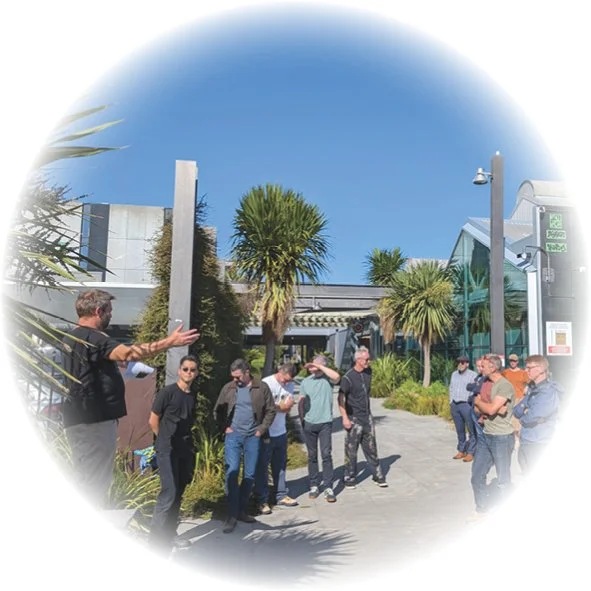
Just like we did with our gin events, we wanted to share our journey with our design community, so on February 25th, we gathered a mix of clients, collaborators, and architects at the Botanic Studio for an evening dedicated to the scents of our local landscape.
The event commenced with a mihi, grounding us in our cultural whenua and setting the intention for our shared experience. From there, Paul led us on our foraging walk through Te Ara Pū Hā. As we walked we discussed each plants habitats, their distinct aromatic profiles, their cultural uses and values to Māori, and of course foraged.
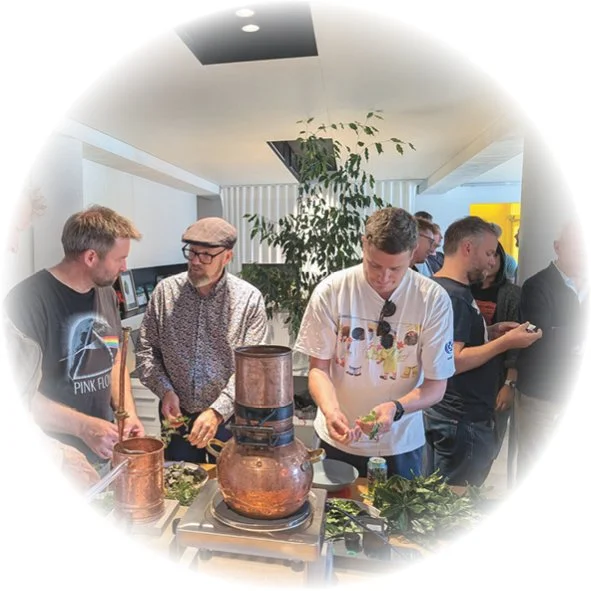
The distillation begins
After gathering our botanical samples, we returned to the studio to teach everyone how to craft fragrances and explore the scents further. We introduced everyone to 'Lance'—our copper still—where the raw plant material began its transformation into hydrosol. The studio quickly became filled with a scent best described (by many) as a ‘walk through the bush in the rain’.
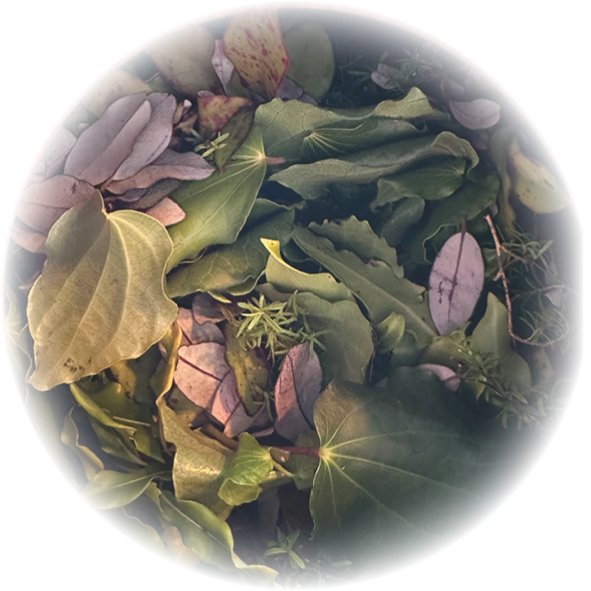
The botanicals
The distillation combined four native plants to create a blended hydrosol, but to give everyone a deeper understanding of each individual plant, we had prepared pure distillations of the four plants, plus a distillation of tī kōuka flowers completed last year in Spring.
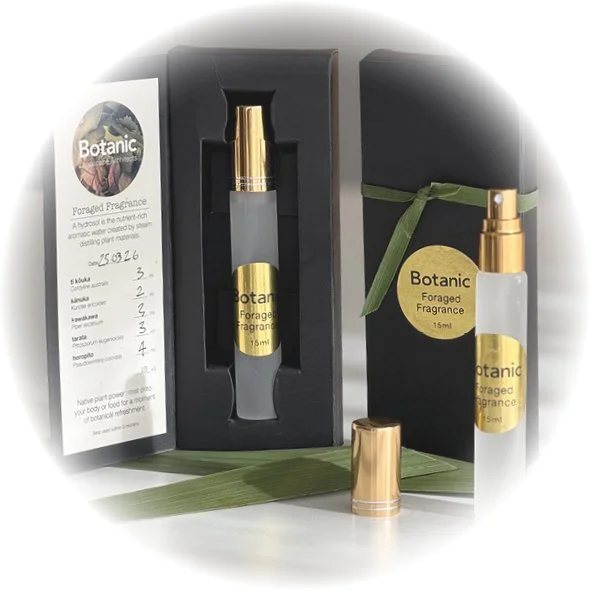
tī kōuka (cabbage tree), Cordyline australis
kawakawa (pepper tree), Piper excelsum
tarata (lemonwood), Pittosporum eugeniodes
horopito (pepper tree), Pseudowintera colorata
kānuka (white tea tree), Kunzea ericoides
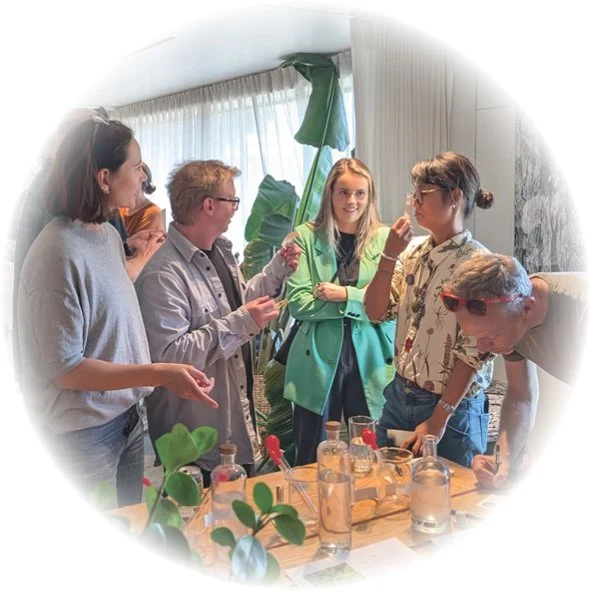
Crafting your personal scent
Attendees were invited to become "noses," testing each of the five hydrosols to learn their individual characteristics—from the spicy warmth of horopito to the citrus brightness of tarata.
Using pipettes and 15ml bottles, the attendees became alchemists, carefully measuring and mixing their own bespoke fragrance to take home. The studio was filled with conversation, the clinking of glass, and a tapestry of native scents.
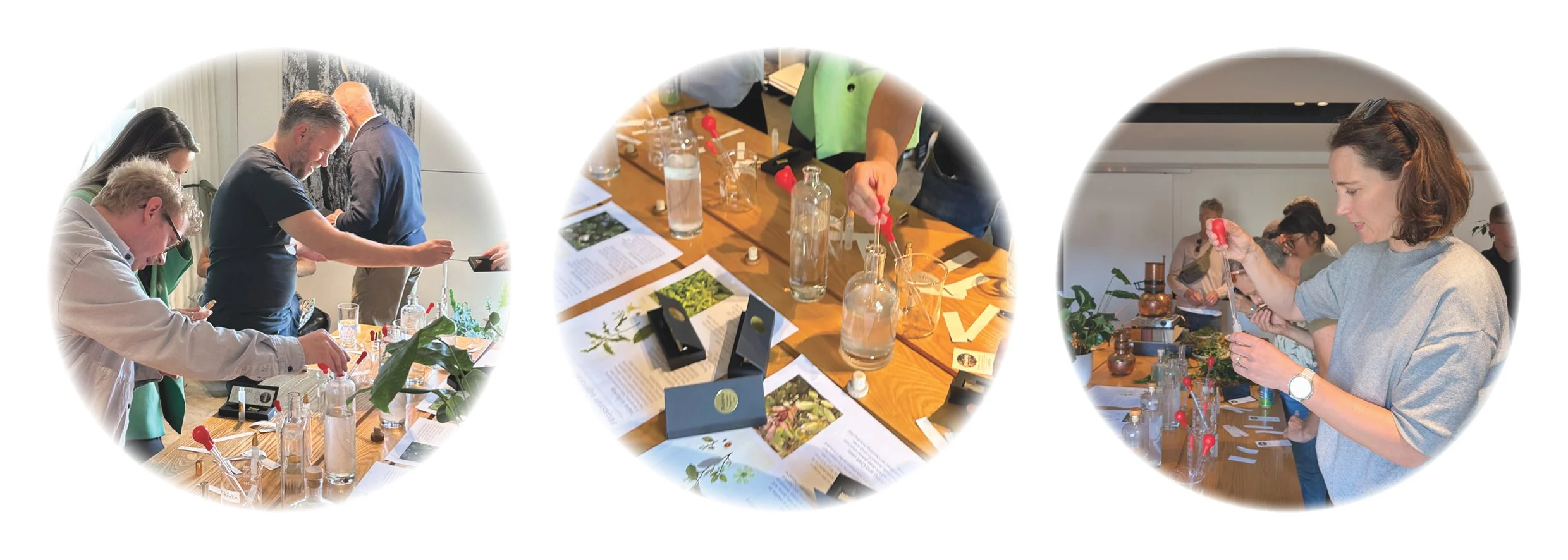
A community connection
Accompanied by great food and drinks, the evening was a reminder of the power of community. It was a joy to see architects, creators, and friends sharing a glass while discussing the sensory nuances of kānuka versus kawakawa.
Thank you to everyone who joined us. We were left with full hearts, inspired minds, and a very fragrant studio. Our next event will capture the scent of the urban spring flowers in late October, so get in touch if you’d like to join us.